Canada
Help for Canada's Homeless
Information for Canadian communities, coalitions, and partners interested in the Compassion Network campus model — a turnkey, community-style answer to chronic homelessness.
The Crisis
Key written articles & research reports on Canada’s homelessness crisis
What Canada’s own researchers and agencies report about the scale of the crisis — and why current responses fall short.
Beyond encampments: an evidence-based path to solving Canada's homelessness crisis
The Lancet Regional Health – Americas, January 2026 (peer-reviewed). Examines national encampment crises, showing over 67,000 homeless individuals nightly, the high cost and ineffectiveness of sweeps, and how Housing First models compare favorably to institutional costs.
Homelessness and Housing in Canada: A Human Rights Crisis — Maureen Owens
Tamarack Institute. Explores how rising housing costs intersect with visible homelessness, shelters, and hidden forms like couch-surfing, which affects roughly 11.2% of Canadians.
Canada’s Housing Crisis: A Growing Challenge for Vulnerable Populations — Tingting Zhang
C.D. Howe Institute, November 2024. Details wait times for subsidized housing (e.g., 14 years in Toronto for a 1-bedroom unit) and evaluates the limits of the federal National Housing Strategy for vulnerable and low-income groups.
Homelessness data snapshot: chronic homelessness among shelter users in Canada, 2017–2024
Housing, Infrastructure and Communities Canada (federal government). Official data tracking chronic homelessness among shelter users: over 36,000 experienced chronic homelessness in 2024, with sharp increases among refugee claimants and women.
Solving Canada's Homelessness Crisis Starts Here: Why Preventing Youth Homelessness Is Critical
Canadian Observatory on Homelessness, 2026. A landmark report: more than 35,000 youth experience homelessness each year, roughly half of homeless adults first became homeless as youth, and public funding heavily favors reactive emergency shelters over upstream prevention.
Homelessness Is a Housing Problem in Canada: Preliminary Findings — CAEH
Canadian Alliance to End Homelessness, August 2026. CAEH reports that rising shelter and unsheltered populations track directly with collapsing vacancy rates and soaring rents in the lowest-cost rental tier across 36 studied communities.
The Crisis
The crisis in the cities
How the crisis materializes in Toronto, Vancouver, and Montreal — drawn from recent research summaries.
Toronto & Ontario: the ‘income trap’ & over-capacity shelters
Extreme shelter demands: Nightly shelter occupancy in Toronto routinely exceeds 9,000 individuals; the 2026 city budget targets accommodating at least 9,178 people nightly, alongside dedicated spaces for an influx of refugee claimants.
The rental math deficit: Ontario’s social welfare system provides individuals on assistance with just $733 per month for all living expenses, while the average cost for a basic room in Toronto has risen to $860.
Demographic shifts: Over 20,000 youth are experiencing homelessness across Ontario; on any given night, more than 1,000 children and teenagers rely on Toronto’s shelter networks or live unsheltered. Homelessness is surging 37% across Northern Ontario and 30% in rural communities.
Vancouver & Metro BC: skyrocketing rents & complex care needs
Record homeless populations: Metro Vancouver’s unhoused population exceeds 5,200 individuals; roughly 28% remain completely unsheltered.
The cost-of-living chasm: One-bedroom apartments in Vancouver average over $2,200 per month; Indigenous populations make up roughly 42% of the unhoused demographic.
Intersecting health crises: A toxic illicit drug supply and severe staffing shortages leave specialized medical and detox beds empty up to half their capacity; the city has opened large-scale “bridge shelters” to move people rapidly from encampments to indoor care.
Montreal & Quebec: paradigm shifts & winter warming emergency
Rapid population growth: Visible homelessness in Quebec has surged 20%, with an estimated 12,000 people unhoused; Montreal established 3,000 24/7 winter warming spaces across seven boroughs.
Evolving encampments: With shelter waitlists maxed out, unhoused individuals are building makeshift winter cabins fitted with solar panels and generators — acute safety and fire hazards.
The “White Paper” findings: A 2026 coalition report of 35 non-profits found 29% of Montreal’s unhoused population transitioned directly out of youth protection services, 23% entered via direct eviction, and 10% came directly from correctional detention.
Solutions
Policy solutions researchers point to
Moving past short-term crisis management, research points to evidence-based pillars — and a model built for exactly this.
Housing First
Immediate provision of a permanent, stable home without requiring sobriety or program compliance first; wraparound supports follow voluntarily. Canada’s long-term At Home/Chez Soi study found Housing First participants achieved stable housing at twice the rate of traditional shelter systems.
Upstream & youth prevention
Intervening in schools, child welfare, and justice systems before people end up on the street — prevention costs a small fraction of reactive emergency shelter infrastructure.
Social & non-market housing expansion
Designating at least 20% of rental stock as non-market housing, with rent geared to income — reversing decades of federal housing cuts. The Compassion Network campus model is built to deliver exactly this kind of permanent, supported community.
Opportunity
Campuses and properties coming available
Across Canada, colleges are closing regional campuses, landmark malls are entering receivership, and massive industrial plants are shutting down — each one a candidate for conversion into a community campus.
College campuses closing
Confederation College — four regional campuses (Kenora, Dryden, Fort Frances, Sioux Lookout, Ontario) close permanently in fall 2027 as international student caps cut enrollment; delivery shifts to a partnership with Seven Generations Education Institute. These are compact single-building hubs, not sprawling campuses — efficient to repurpose.
Broader pressures: Manitoba Institute of Trades and Technology is winding down — Canada’s first public college to do so — and schools across Ontario, BC, and Quebec have suspended hundreds of programs or shuttered satellites (including Algonquin College’s Perth campus).
Malls seeking closure & redevelopment
Place Versailles (Montreal, ~42 acres) — progressive demolition from 2026/2027. Woodbine Centre (Toronto area, 50+ acres) — in receivership, marketed for residential redevelopment. Dixie Outlet Mall (Mississauga, 400,000+ sq ft) — in receivership since March 2026.
Industrial complexes closing
RYAM (Témiscaming, QC) — halted October 2026. INVISTA (Maitland, ON, 1,000-acre waterfront park) — phase-out by 2027. Woodward Aerospace (Peterborough, ON, 379,415 sq ft) — closes August 2027. AV Nackawick Pulp Mill (NB, 350 workers) — idled October 2026. Plus: Stelco/Algoma steel (Hamilton), the Kaufman rubber plants (Kitchener), decommissioned auto plants (Ford St. Thomas, Chrysler Windsor, Navistar Chatham, GM Sainte-Thérèse), and Montreal’s landmark Malting Silos.
Land would then be available for a new community center.
The Vision
Building a new Main Street!
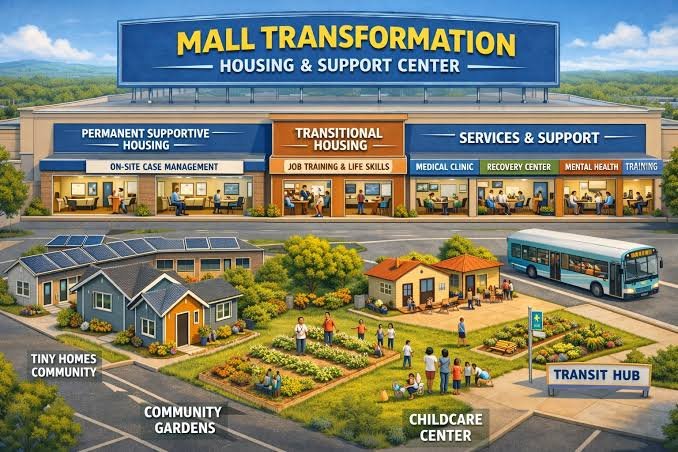
What a vacant mall, an empty office building, or a quiet campus becomes: permanent homes, shops, gardens, and neighbors — a Main Street again.

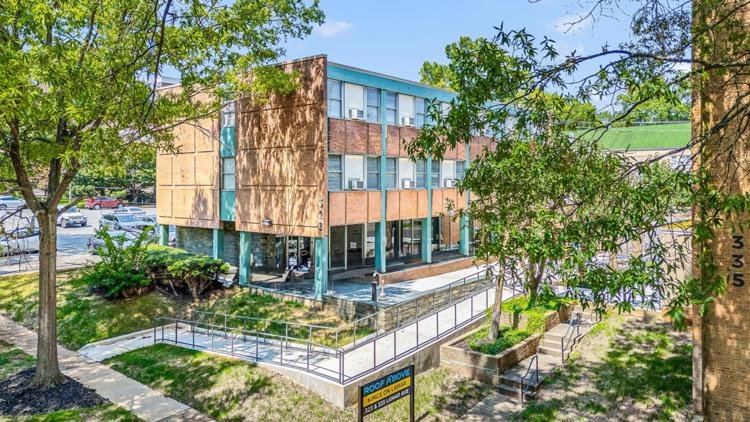
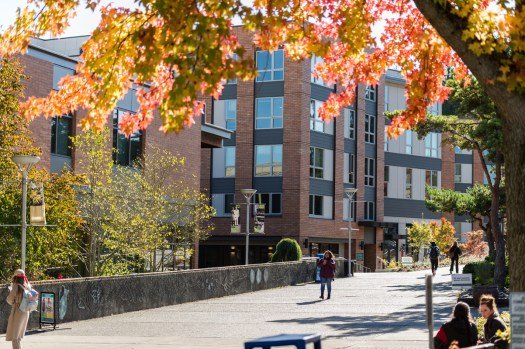
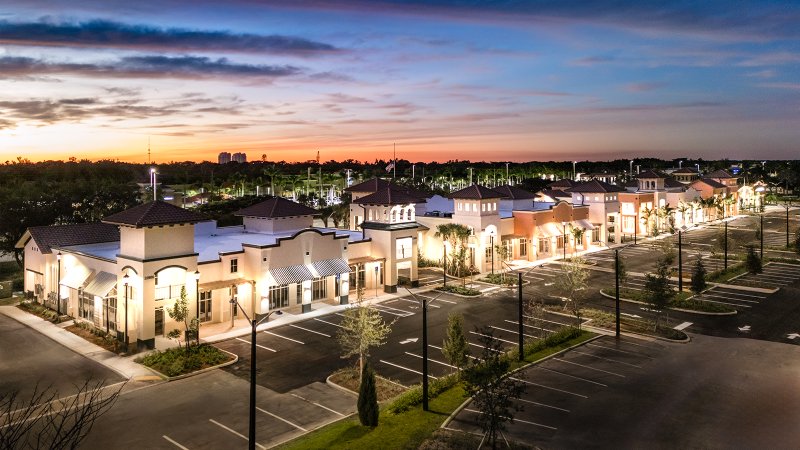


The look: old downtown, made new
“It would be so beautiful to recreate any of these downtown areas that are absolutely picturesque and make this new Village into a place to end homelessness and bring communities together.” — Betsy O’Connor


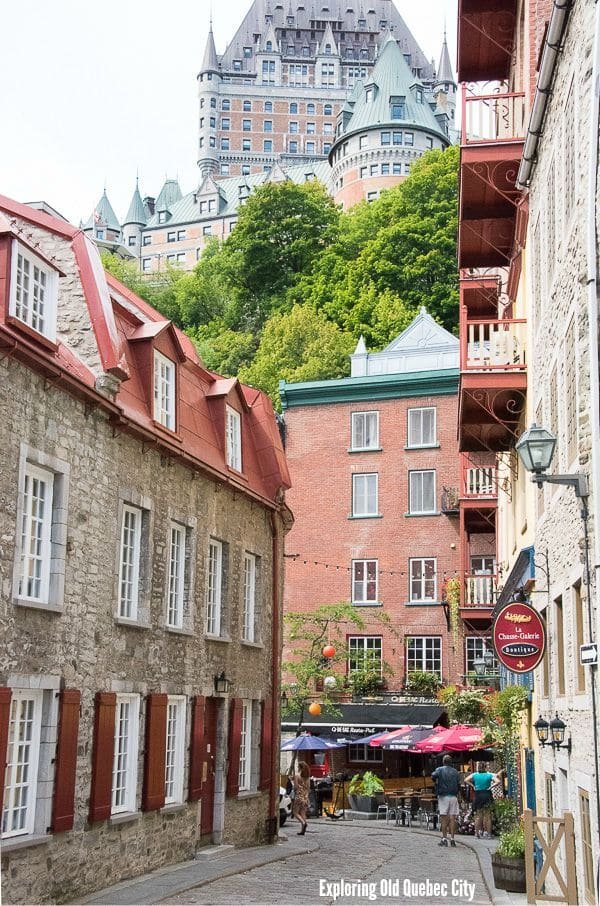





“These photos show heart in Canada — let’s spread heart to all of Canada and include everybody.”
🍁
Celebrate Canada — celebrate finally ending homelessness!
En français
French-language materials are on the way
Materials for French-speaking Canadian communities and partners are being prepared and will appear here.